The NCCRP stands for the Nigeria Climate Change Response Programme and is a six-year (2019-2025) Technical Assistance support programme to guarantee the country’s economic growth and development strategies while meeting its Paris Agreement (2017) pledge of conditionally reducing its Greenhouse Gas emissions by 45% by 2030, when compared to “business-as-usual” levels.

MISSION
NCCRP project intends to assist Nigeria’s Nationally Determined Contributions (NDCs), under the Paris Agreement in meeting its conditional 47 per cent emissions reduction target by 2030.
SPONSOR
The NCCRP is funded by the European Union (EU) and will be implemented at the territorial level of the Federal Republic of Nigeria and the selected pilot states of Kano in the north of the country and Ogun in the south of the country.

PARTNERSHIP
We are in partnership with the Department of Climate Change (DCC) of the Federal Ministry of Environment, and the National Council on Climate Change (NCCC) Secretariat, the Technical Assistance Team (TAT) works with different target groups and stakeholders to improve Nigeria’s Greenhouse Gas (GHG) emission profile with the aim of pinpointing mitigation actions reducing energy use and costs in favour of renewable energy and energy-efficient solutions. This will be mainly achieved through the creation of sectoral Measurement, Reporting and Verification (MRV) frameworks (e.g. for energy and waste sectors) and a waste baseline.
PROGRAMME
The programme’s genesis is traceable to the EU’s desire under its Global Public Goods and Challenges Thematic Programmes, and is designed to contribute to Nigeria’s progressive achievement of Sustainable Development Goal (SDG) 13 on “climate action”. Additionally, It promotes progress towards goals 7 “affordable and clean energy” and 5 “gender equality”
Key Achievements
MRV – Institutional strengthening to track national greenhouse gas emission levels.
• Comprehensive analysis of Nigeria’s current legal framework and institutional capacity for the development of a national MRV system.
• Proposal of an institutional and procedural MRV framework for the energy sector.
• Development of the conceptual institutional and reporting quality assurance frameworks for Nigeria’s MRV system for the energy and waste sectors.
• Development of the Data management and Quality Assurance and Quality Control tool (RISQ Tool) with Nigeria specifications.
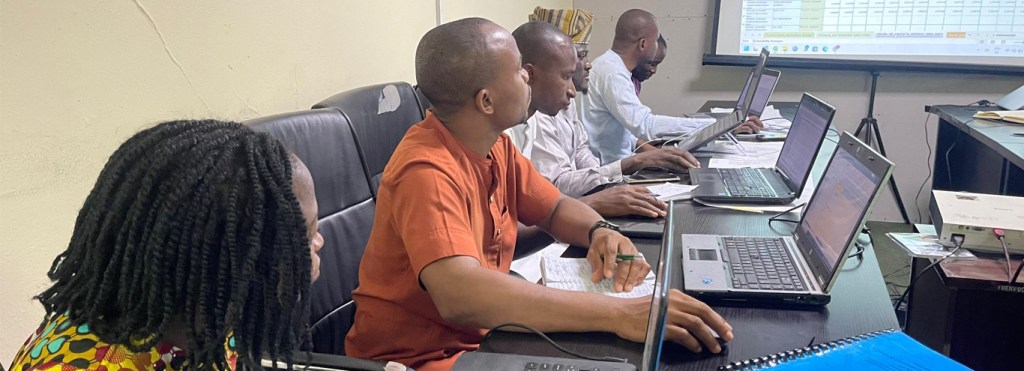
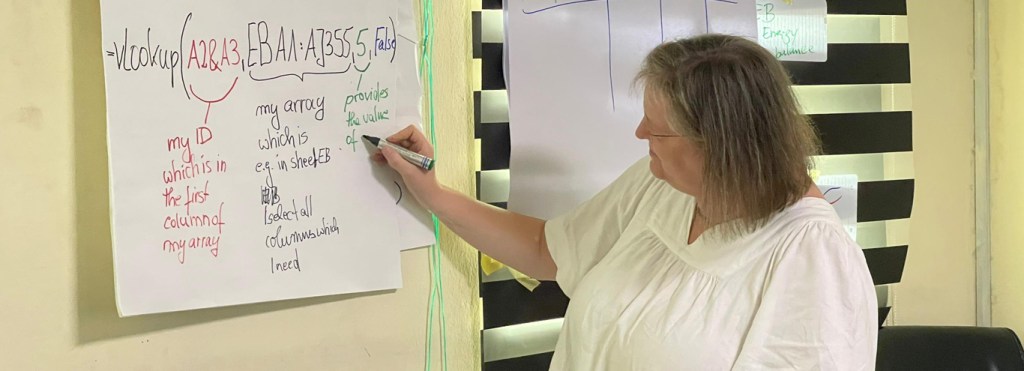
• Training of 355 participants to build capacity on the implementation of MRV systems with special reference to the Paris agreement; the transparency framework and use of MRV systems; Needs and requirements to set up MRV systems; and international requirements for MRV within the institutional frameworks.
COMMUNICATION – Increasing climate change awareness across a diverse set of stakeholders to encourage climate action at the individual and government level.
• Development of Environmental Education Programmes at the Primary, Junior Secondary and Senior Secondary level and a corresponding Teacher’s Manual to increase climate change knowledge.
• Dissemination of climate change knowledge for public consumption through NCCRP website and social media – X, Facebook and Youtube.
• Training of 43 journalists to use print and electronic media to increase capacity to cover climate change stories and the formation of the Nigerian Journalists for Climate Action Network.
• Recording of 38 “Save Our Planet” radio episodes in Pidgin, Yoruba and Hausa, to raise awareness on climate change topics.
• Producing a documentary film on climate change scenarios in Abuja (FCT), Lagos, Oyo, Katsina, Kano, Borno, Rivers, Ondo, Kogi, Benue, Abia and Ogun States.
INTEGRATED SOLID WASTE MANAGEMENT – Increasing the capacity of Nigeria to manage solid waste treatment, recovery and disposal.
• Waste characterisation survey on solid waste management and GHG emissions from waste sector conducted in six geopolitical zones to enable the inclusion of emissions from solid waste in Nigeria’s NDC review.
• Setting protocols for the monitoring and reporting of Solid Waste Management related data to comply with international procedures.
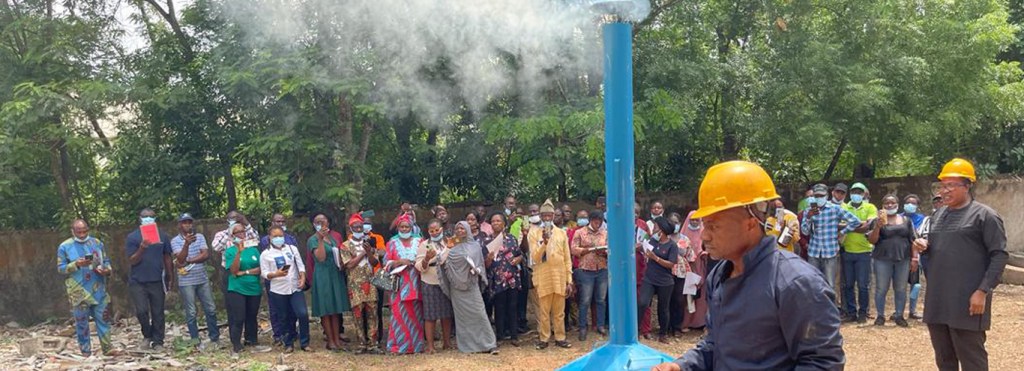
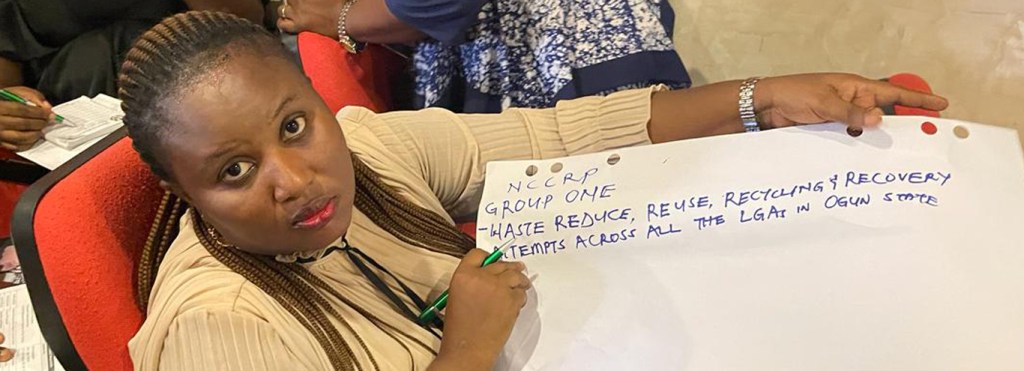
• Six training workshops for 360 stakeholders in waste sector in Nigeria, including technical staff in the public offices and waste operators, CBOs/NGOs and waste operators in Ogun and Kano States.
INTERNATIONAL TRANSFER OF MITIGATION OUTCOMES (ITMOs)
ITMOs are tools for enhancing flexibility and cooperation in global climate action, making it easier for countries to achieve their emissions reduction targets collectively.
It is a mechanism under the Paris Agreement that allows countries to trade emissions reductions, helping them meet their climate targets, known as Nationally Determined Contributions (NDCs).
In this regard, the NCCRP is developing Nigeria specific tools to facilitate the mitigation process.
These tools include the Grid Emission Factor, Sustainability Criteria, the Investors Guide and the Long-term Regulatory Framework.
Location
10 Gimbiya Street, Area 11, Garki, Abuja F.C.T. Nigeria
Contact
Email: info@nccrp.org – Tel: +234 813 294 3393
 NCCRP
NCCRP 