NCCRP holds successful Waste Management Campaigns in Kano and Ogun States

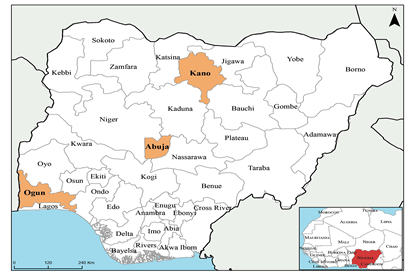
May 2024 was a busy month for the Nigeria Climate Change Response Programme (NCCRP) as it launched two successful campaigns in Kano and Ogun States. The two campaigns were hosted by the Ministries of Environment in both states. The campaigns started with online creative messages disseminated through NCCRP social media spaces including Facebook and Twitter (X).

In Abeokuta, Ogun State, the Waste Management Campaign (WMC) planning and executing committee was hosted by Mr. Egbemuyiwa Olatunji, Director, Planning, Research and Status Ogun State Waste Management Authority (OGWAMA). The campaign was flagged off by Mr Ola Oresanya, Commissioner of State at Kuto Market, Abeokuta. In attendance were officials from the Ministry of Environment, OGWAMA, NCCRP as well as communities in Abeokuta and the Ogun State Media. Activities of the campaign included demonstration of proper waste disposal measures such as sorting wastes at source by Dr. Taiwo Hammed of NCCRP.
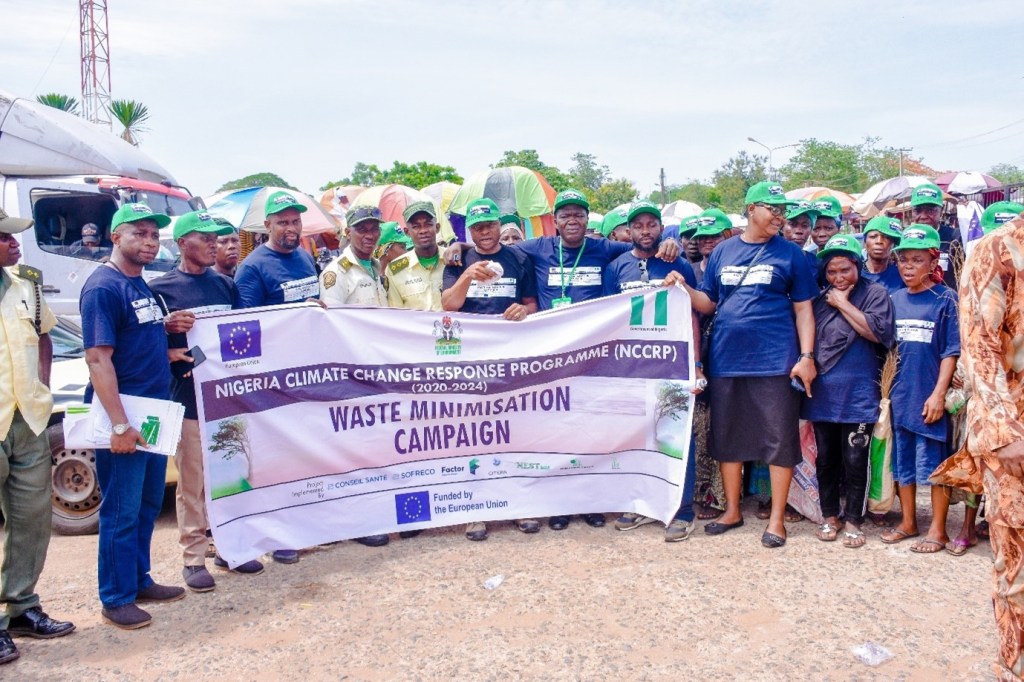
Waste Minimization Campaign in Abeokuta, Ogun State

Other activities of the campaign included cleaning exercises and mobile caravan that moved from place-to-place sensitizing residents on the importance of adhering to proper waste management. These messages were amplified through the media in form of jingles, newspaper stories, news bulletins on Radio and TV. In addition, fliers were disseminated with detailed information of waste management procedures. The colourful events were also graced with the participation of local dancers, trumpet blower, horse riders and road safety corps.

In Kano, campaign activities were coordinated through the office of Director, Department of Sanitation Mr. Ahmed Idris. The campaign was flagged off a representative from the Ministry of Environment at Tarauni Market, Kano. In attendance were officials from the Ministry of Environment, DCC officials, NCCRP officials, Sarkin Kasuwa -Traditional Head of Tarauni Market, Kano community and the Media.

Both campaigns were received with enthusiasm, with the Ministry requesting for long term interventions to ensure changed attitudes and adoption of climate friendly behaviour patterns among the communities.
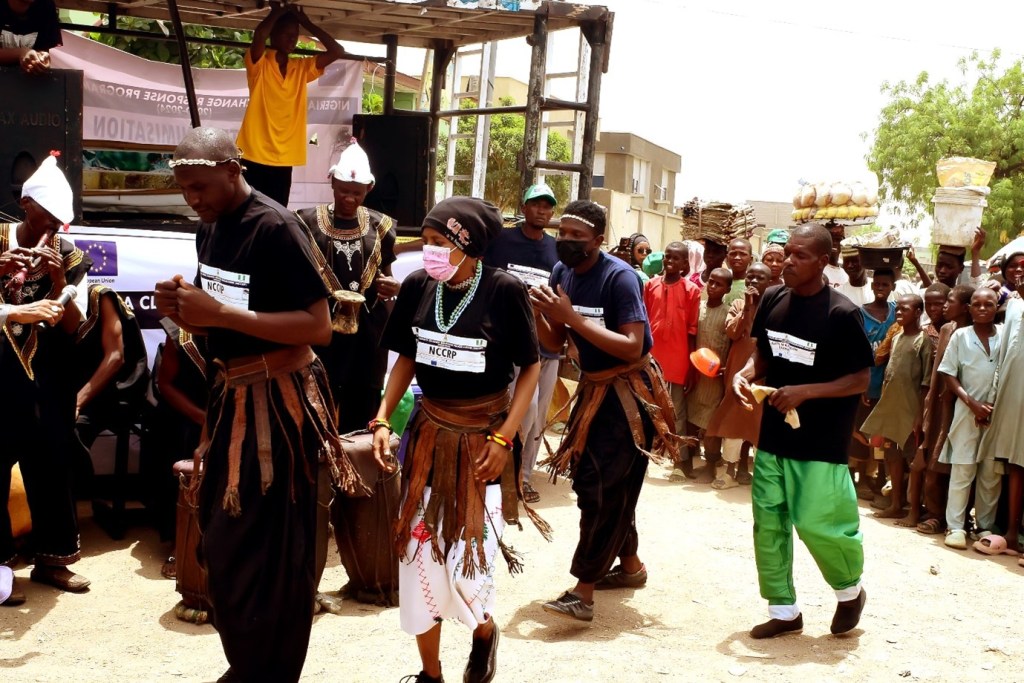
Koroso dancers entertaining Waste Minimization Campaign Participants in Kano

Article by Elizabeth Mwaniki, NCCRP
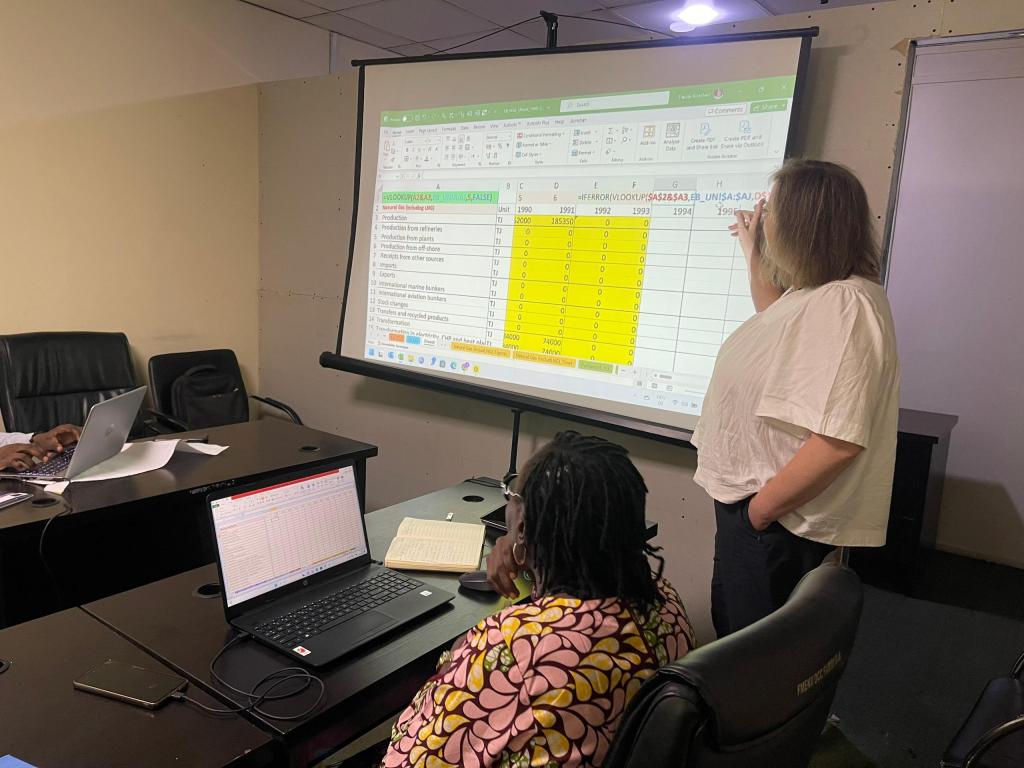
NCCRP equips experts with capacity-building and technical support for reporting GHG inventories in the energy sector.

Nigeria is committed to implementing the United Nations Framework Convention on Climate Change (UNFCCC) and its related treaties and agreements. In 2017, Nigeria ratified the Paris Agreement and embarked on an economic development drive that takes into consideration the reduction of its Greenhouse Gas (GHGs) emissions unconditionally by 20% and conditionally by 47% by 2030, as pledged in the Nationally Determined Contributions (NDC) in line with the Paris Agreement of which Nigeria is a signatory.

Under the enhanced transparency framework, Parties to the Paris Agreement are required to submit Biennial Transparency Reports (BTR) every two years, with the first submission due by 31 December 2024.

BTR includes information on national inventory reports, progress towards NDCs, policies and measures, climate change impacts and adaptation, levels of financial, technology development and transfer and capacity-building support, capacity-building needs and areas of improvement.

To prepare Nigeria towards the submission of the BTR this year, NCCRP is equipping experts with capacity-building and technical support for preparing and reporting GHG inventories in the energy sector.

Traute Kother, NCCRP’s senior short-term expert in capacity building of stakeholders on greenhouse gas inventories in the energy sector in Nigeria said, “About 100 stakeholders are being trained on the 2006 IPCC guidelines and software, and the use of GHG inventory tools in the energy sector”.

“After all these trainings, we intend to use the software to calculate our GHG emissions, our level of consumption of fossil fuel in Nigeria and prepare our inventory. We are gaining the knowledge needed for the inventory preparation from the NCCRP”, Ikechukwu Okoro, an IPCC software trainee stated.

The stakeholders hope to independently develop data collection templates and tools and conduct a pilot application of GHG inventory in Nigeria’s Energy sector before December 2024.

2023 World Environment Day: NCCRP proffers practical solutions to plastic pollution

Nigeria joined the rest of the world to commemorate the 2023 edition of the World Environment Day on 3rd of June 2023 in Abuja under the theme “Beat Plastic Pollution”.

Organised under the auspices of the Federal Ministry of Environment with the support of the European Union-funded Nigeria Climate Change Response Programme (NCCRP) and other NGOs, the event attracted around 200 participants and featured presentations, cultural dance, drama sketch among others.

In his keynote address, the Permanent Secretary of the Federal Ministry of Environment, Mr. Yusufu Idris Ibrahim said, “Nigeria is one of the countries with the fastest growing population in the world and produces enormous volumes of wastes as a result of her prevalent linear economy (extract-make-use-dispose) approach to production and consumption, where materials are used to manufacture products that last one lifespan before becoming waste.”

Nigeria generates an estimated 2.5 million tons of plastic waste annually, of which 12% is recycled and 88% of plastic waste ending up in landfills, waterways, and oceans.

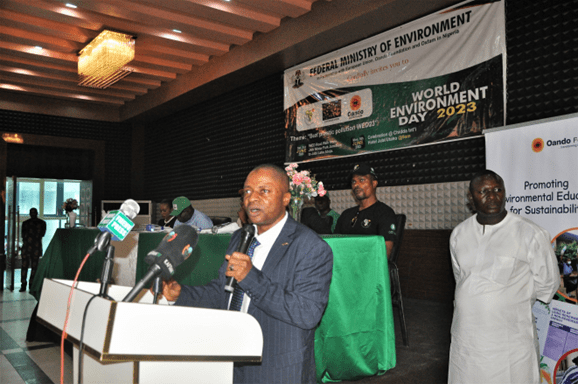
Delivering a lecture on “Plastic Waste in Marine Environment: Causes, Effects and Solutions” at the event, NCCRP’s Key Expert on Solid Waste Management, Dr. Taiwo Hammed said while eliminating the use of plastics is difficult, beating the attendant pollution lies in channeling plastics back to the value chain as much as possible with the introduction of policies and enforceable regulations. He added that scrap tyres can be converted into Carbon Black, Paver Bricks and Wax Polish while T-Shirts can be produced from 28 PET bottles.

“The waste materials can be cleaned, melted and converted back into recyclable raw materials which can be returned into the industrial stream”, Dr Hammed concluded.

Taiwo Hammed (NCCRP Key Expert) delivering a lecture on solutions to plastic pollution by Kayode Egbeleye (2023)

A cross section of participants at the 2023 World Environment Day by Kayode Egbeleye (2023)

Also speaking at the event, a representative of the European Union Delegation in Nigeria and ECOWAS region, Mr. Sabri Mekaoui said the issue of plastic pollution should be tackled from political, economic, societal, technological environmental, and legal perspectives.

According to Mr. Mekaoui, there is a rising awareness of plastic pollution, and the EU is supporting the Nigerian Government through the Nigerian Climate Change Response Programme to combat plastic pollution and mitigate its impact on climate change.

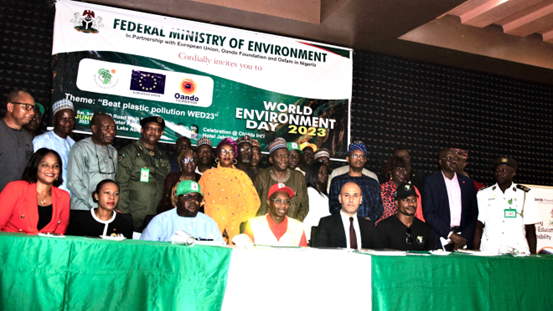
Directors of the Federal Ministry of Environment and other agencies pose for a group photograph during the 2023 World Environment Day celebration in Abuja by Kayode Egbeleye (2023)

This year’s World Environment Day in Abuja was co- organised by the Federal Ministry of Environment, Oxfam, the Oando Foundation, and the European Union.

Resourceful Craftsman Gives Wastes a New Lease of Life

Nigeria is one of the biggest contributors to an ever-growing mountain of solid waste across Africa.

The young and old alike, consider junkyards and landfills as potential gold mines that offer untapped opportunities to raise cash and put food on their tables.

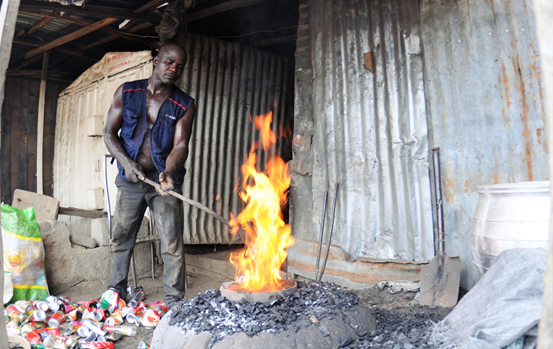
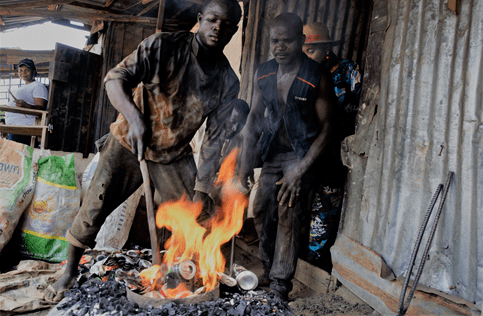
Disused cans of beer, leaking saucepans, and motorcycle spare parts constitute the bulk of raw materials on which recyclers like 30-year-old Josiah James depend on to fabricate novel items and sell them with added value.

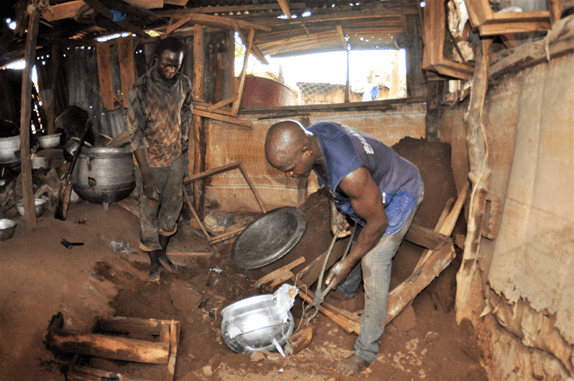
In his makeshift workshop located in Bwari market just outside Abuja, Josiah James toils daily with his apprentice to give what we consider as wastes a new lease of life.

In Nigeria, no fewer than 42 tonnes of waste are generated annually with an estimated 0.65-0.95 kg/capita/day. This is more than half of the 62 million tonnes of waste generated in sub-Saharan Africa annually.

Josiah puts finishing touches to the newly moulded cooking pot

A father of three children and native of Garmi village in the Kagarko Local Government Area of Kaduna State, Josiah quickly realised that his secondary school education might not enable him to earn enough money to put food on the table for his family.

After a three-year apprenticeship in 2013, Josiah had his eyes riveted on Abuja as his prime destination of choice. “I left Kaduna and came to Abuja to start my workshop because business moves faster here”.

But Josiah’s fifteen–year career as a waste recycler has not been all hunky-dory.

Living with the heat: Josiah watches the aluminium cans and allied metal scraps transform into a red-hot liquid

Beyond earning money to take care of his family, Josiah says the recycled items he manufactures from materials that would otherwise be piling up in the nation’s landfills make an enormous difference to our environment, quality of life, and country’s future.

While Josiah’s current daily output ranges between 10 and 15 pots, he believes he can do more if the conditions are right.

Since he opened his workshop, at least five apprentices have passed through Josiah’s tutelage with the prospect of establishing their own workshops.

This cohort is one of the many targeted outreach efforts of the Abuja-based Association for Waste Recovery and Renewable Energy, (AWARE), founded by Justina Ezeuzoh.

According to Justina Ezeuzoh, founder of AWARE, while small in scale, local recyclers are making an impact by exchanging trash for cash.

Like most countries, Nigeria continues to experience its fair share of problems with waste management. Ms Ezeuzoh said, “the fundamental problem we have is because of the logistics and the fact that Waste management is pretty expensive.”

One key task of the Nigerian Climate Change Response Programme (NCCRP) is strengthening the country’s capacity to manage its solid waste to reduce greenhouse gas emissions including methane whose Global Warming Potential is high.

RISQ Tool for the Compilation of Green House Gas Inventory Workshop (4-8 July 2022)

The Nigerian Climate Change Response Program (NCCRP) is facilitating the implementation of Monitoring, Reporting and Verification (MRV) systems for Waste and Energy sectors.

To assist in establishing sustainable MRV systems, our Team has developed a Resource for Inventory Safety and Quality (RISQ) Tool, a stand-alone system for compilation, documentation, archiving, analysis, verification, repository, sharing and reporting of Green House Gas (GHG) data and information. The tool will be instrumental in assisting Nigeria in meeting its transparency requirements on GHG inventory under the Paris Agreement.

On 4-8 July 2022, we invited key stakeholders in the Waste and Energy sector participate in a capacity-building training on the use of the RISQ Tool. Snippets from the event can be found in the videos below.

NCCRP Fact Sheet 004

About the Programme

Following the ratification of the Paris Agreement in 2017, Nigeria committed itself to conditionally reducing its greenhouse gas (GHG) emissions by 47% in 2030 in line with its Nationally Determined Contribution (NDC) pledge (2021 Revised figure).

To support Nigeria’s mitigation and Sustainable Development Goal (SDG) 13 on “climate action” efforts, the European Union, under its Global Public Goods and Challenges Thematic Programmes, is funding the Nigerian Climate Change Response Programme (NCCRP).

The NCCRP also promotes progress toward goals 7 “affordable and clean energy” and 5 “gender equality”.

The Conseil Santé Consortium collaborates with the Department of Climate Change, and the Federal Ministry of Environment to implement the NCCRP.

NCCRP Intervention Areas

Programme Goal

The NCCRP is intended to:

  • Enhance Nigeria´s capacity to meet its NDC´s pledge of a conditional 47 per cent reduction of Greenhouse Gas emissions by 2030 in line with SDG 13 on climate action (2021 Revised figure).

Specific Objectives

The NCCRP is designed to achieve the following specific objectives:

  • Establish the Measuring, Reporting and Verification (MRV) framework as well as the implementation of sustainable sectoral MRV systems for waste and energy.
  • Disseminate climate change knowledge through awareness-raising campaigns targeting the youth, civil society, stakeholders, and policymakers.
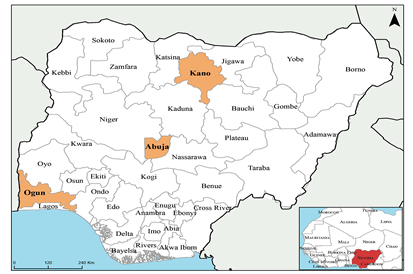
  • Establish National and two States waste baselines and emissions profiles associated with sustainable capacity building of best practices.

Project Team

The Conseil Santé Consortium, a French agency focused on international health, social protection, climate change adaptation and mitigation, is leading the SOFRECO, CITEPA and FACTOR outfits in providing technical assistance for the NCCRP’s implementation.

        Waste Recycling: Retrieved aluminium cans and car tyre rims
        from the landfill being smelted to fabricate giant cooking pots.
(Bwari, FCT, June 2022).

The Technical Assistance Team (TAT), supported by the subcontracted partners: NEST and CENRAD, is responsible for providing advice and expertise, in collaboration with relevant stakeholders (private sector, civil societies, academia, national and sub-national governments).

Internationally Transferred Mitigation Outcomes (ITMOs)

The NCCRP’s activity scope was expanded in December 2021 with the inclusion of the Internationally Transferred Mitigation Outcomes component – ITMOs.

This newly introduced element is envisioned to build Nigeria’s capability in the direction of understanding and effectively taking advantage of the Internationally Transferred Mitigation Outcomes (ITMOs) to achieve its Nationally Determined Contributions (NDCs), promote sustainable development and ensure environmental integrity, transparency, and governance.

Nigeria is expected to apply robust accounting to ensure, inter alia the avoidance of double counting, consistent with the guidance adopted by the Conference of the Parties. The use of ITMOs to achieve NDC under the Paris Agreement shall be voluntary and authorised by the participating Parties.

Timeline

The NCCRP is expected to last fifty-four months.

(From January 2020 to July 2024).

NIJOCAN MEMBERS COMMIT TO IMPROVED MEDIA COVERAGE OF CLIMATE CHANGE

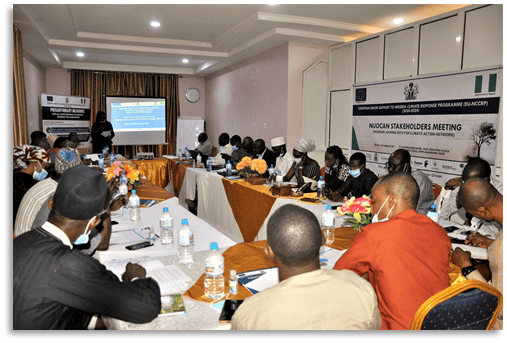
A two-day meeting of the Nigerian Journalists for Climate Action Network (NIJOCAN) was held on the 24th and 25th February 2022 at the Golden Dabis Hotel, Keffi in Nasarawa State.

The meeting was a follow-up activity to the Capacity Building Workshop for selected Nigerian journalists earlier organized by the Nigeria Climate Change Response Programme (NCCRP) in March 2021. The workshop was intended to sharpen journalists’ skills in reporting and telling stories on climate change.

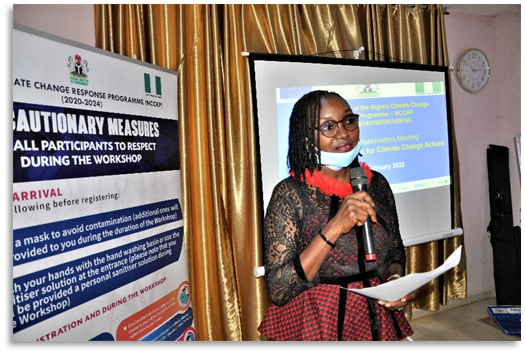
Standing in to deliver the Department of Climate Change (DCC) Director’s opening remarks was Mrs. Victoria Pwol, the Deputy Director and Head of the GHG Division.

Mrs. Victoria PWOL, DCC Deputy-Director & Head of GHG Division during the delivery of the opening remarks.

Welcoming participants to the meeting, the Director of the Department of Climate Change (DCC), Dr Iniobong Abiola-Awe commended the journalists for their enthusiasm and sustained interest in becoming allies of the Federal Government of Nigeria’s efforts of meeting its commitment to combat climate change challenges through awareness-raising.

In conclusion, Dr Abiola-Awe reminded the journalist of the urgency of achieving the meeting’s expected results while thanking Nigeria’s development partners, particularly the European Union for its unrelenting efforts towards ensuring the fulfilment of Nigeria’s conditional commitment to reduce Greenhouse Gas (GHG) emissions by 47 % come 2030.

Highlights of the meeting include the dissolution of the Interim Executive Committee followed by an election of a substantive Executive Committee that will steer the affairs of the Network for the next twelve months.

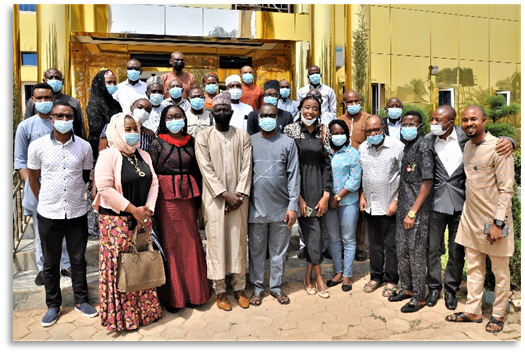
Members of the NIJOCAN pose for a group photograph

Before bringing deliberations to a close on the first day of the meeting, members of the NIJOCAN interacted with the staff of the Department of Climate Change to exchange views on Nigeria’s climate change priorities, challenges, and promising innovations to feed into the Network’s twelve-month Action Plan.

A cross-section of NIJOCAN members during the deliberations

In a communique issued and signed by the Chairman of the NIJOCAN, Mr Chuks Oyema from the Authority Newspaper, the Network agreed to a memorandum of understanding with the NCCRP to create the needed awareness on climate change through robust reporting and publication of the subject matter to alleviate poverty and promote climate change action, aimed at economic justice for Nigerians.

NCCRP Project Steering Committee Holds Its Maiden Meeting in a Hybrid Format

The Nigeria Climate Change Response Programme (NCCRP) held its first Project Steering Committee meeting on the 9th of December 2021 at the Barcelona Hotel, Abuja.

The Steering Committee meeting aims to contribute to effective programme implementation and enhance its impact, facilitate the collaboration, enhance formation transfer and results uptake.

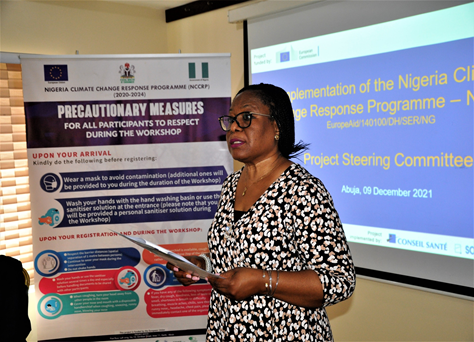
The Steering Committee meeting followed an agenda that started with a speech by the Director of the Department of Climate Change (DCC), Dr Iniobong Abiola-Awe.

Welcoming the participants at the meeting, Dr Awe commended them for their continuous interest, energy and participation in the programme. She reminded the committee members of their role of making directional decisions on various activities of the programme including producing ideas for strategy and problem solving.

Director, Department of Climate Change,
Dr. Iniobong Abiola Awe declaring the PSC meeting open.

Dr Awe, while concluding her remarks said, “I thank the European Union for your dedicated support and our key experts by encouraging you to participate in a spirit of collaboration and with a willingness to contribute to the successful implementation of the programme” In attendance at the meeting, chaired by Professor Emmanuel Oladipo, of the University of Lagos were representatives of the Contracting Authority, European Union Delegation, local implementing partners.

The main topics, which came up during the meeting included: the project background and administrative bodies, Terms of Reference of the Project Steering Committee and an overview of the programme implementation and challenges.

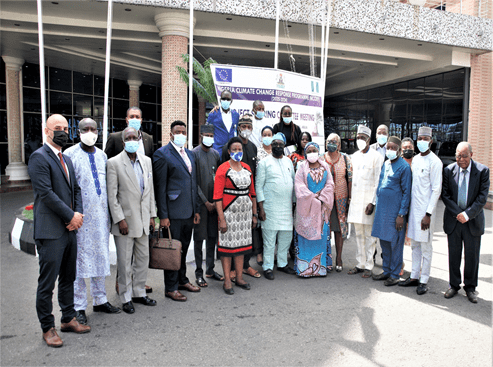
Project Steering Committee Members, Abuja

While acknowledging the impact of the COVID-19 Pandemic on the implementation of the programme following its inception, Dr. Todd Ngara led the members of the Technical Assistance Team to catalogue the activities implemented so far across three key tasks of the programme: Monitoring, Verification and Reporting of Greenhouse Gas Inventory, Solid Waste Management and Dissemination of Climate Change Knowledge.

Dr Ngara thereafter presented to the Committee a detailed list of activities planned for implementation during the year 2022.

Commenting on the meeting’s outcome, the Chairman of the Project Steering Committee, Professor Oladipo stressed the importance of reorienting the programme’s implementation to maximise its impact and reach beyond the current catchment areas of the Federal Capital Territory, Kano, and Ogun States.

The Nigeria Climate Change Response Programme is funded by the European Union and the Federal Government of Nigeria is the end beneficiary of the Project.

NCCRP Fact Sheet October 2021

About the Programme

Following the ratification of the Paris Agreement in 2017, Nigeria committed itself to conditionally reduce its greenhouse gas (GHGs) emissions by 47% in 2030 in line with its Nationally Determined Contribution (NDC) pledge (Revised figure).

To support Nigeria’s mitigation and Sustainable Development Goal (SDG) 13 on “climate action” efforts, the European Union, under its Global Public Goods and Challenges Thematic Programmes, is funding the Nigerian Climate Change Response Programme (NCCRP).

The NCCRP also promotes progress towards goals 7 “affordable and clean energy” and 5 “gender equality”.

The Conseil Santé Consortium collaborates with the Department of Climate Change, Federal Ministry of Environment to implement the NCCRP.

NCCRP Intervention Areas

Programme Goal

The NCCRP is intended to:

  • Enhance Nigeria´s capacity to meet its NDC´s pledge of conditional 47 per cent reduction of Greenhouse Gas emissions by 2030 in line with SDG 13 on climate action (2021 Revised figure).

Specific Objectives

The NCCRP is expected to achieve the following specific objectives:

  • Establish the Measuring, Reporting and Verification (MRV) framework and the implementation of sustainable sectoral MRV systems for waste and energy.
  • Disseminate climate change knowledge through awareness-raising campaigns targeting the youth, civil society, stakeholders, and policymakers.
  • Establish a National and two States’ waste baselines as well as emissions profile associated with sustainable capacity building on best practices.
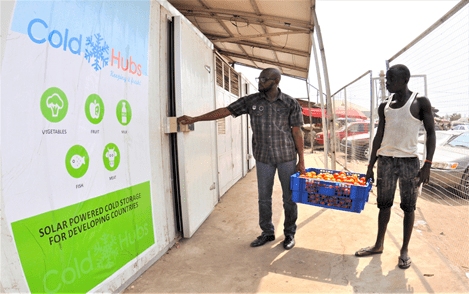
         Shelf life of perishable farm produce prolonged till the next market day in Dei-Dei, FCT with a solar-powered cold storage  
 (March 2021).

Project Team

The Conseil Santé Consortium, a French agency with a focus on international health, social protection, climate change adaptation and mitigation is leading the SOFRECO, CITEPA and FACTOR outfits in the provision of technical assistance for the NCCRP’s implementation.

The Technical Assistance Team (TAT), supported by local partners: NEST and CENRAD, is responsible for providing advice and expertise, in collaboration with relevant stakeholders (private sector, civil societies, academia, national and sub-national governments).

Other areas within the programme’s scope include institutional development and coordination, institutional strengthening, capacity building, planning, budgeting, and financing.

The NCCRP also builds capacity at the Federal and State levels while supporting service management, monitoring progress against set programme performance indicators.


Timeline

The NCCRP is expected to last fifty-two months.

(From January 2020 to June 2024).