Towards the establishment of a MRV system in Nigeria’s energy and waste sectors
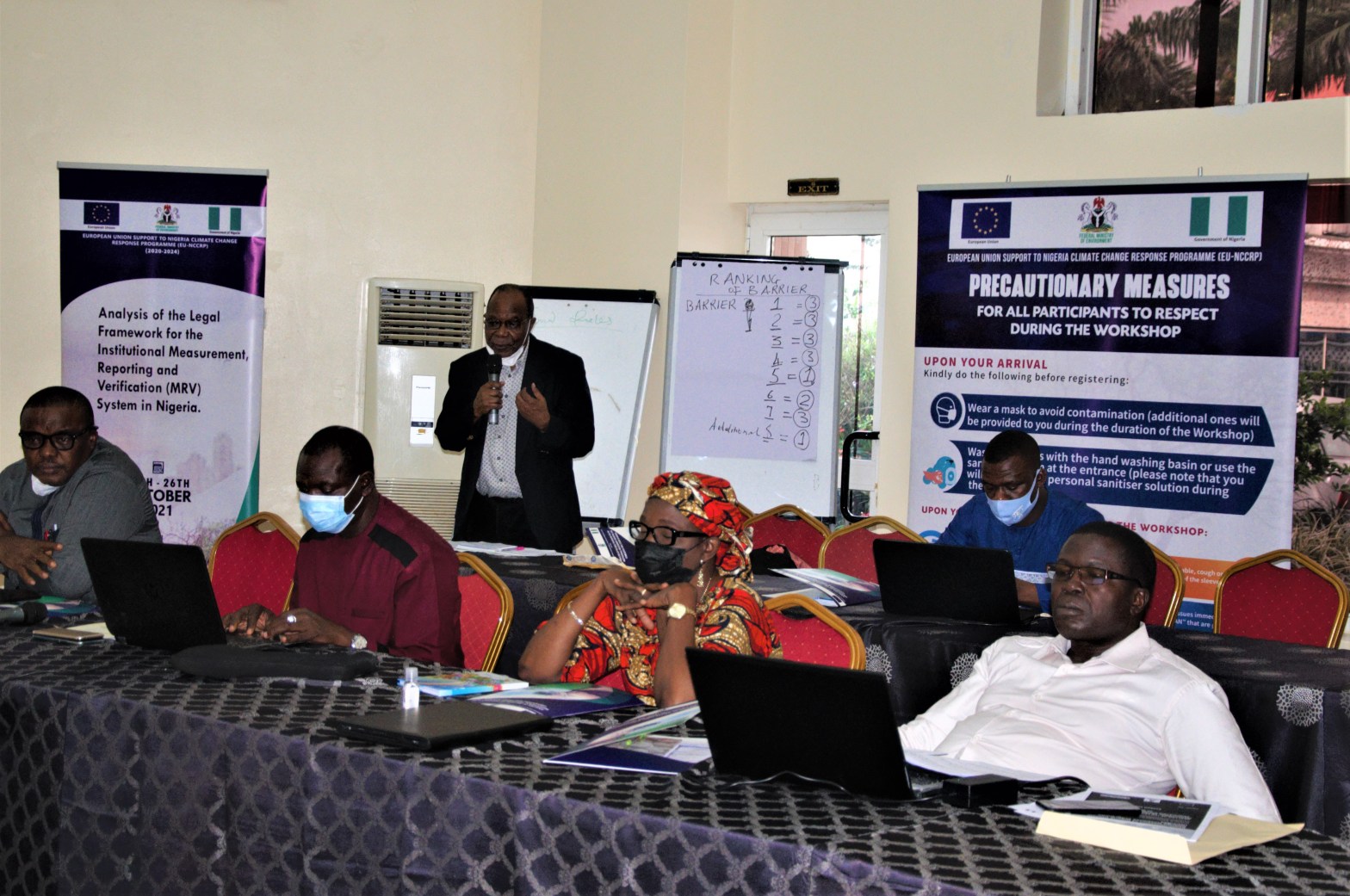
Stakeholders in Nigeria’s energy and waste sectors have validated draft reports of consultants in a bold attempt to put in place a robust legal framework for the Institutional Measurement, Reporting and Verification (MRV) Energy and Waste Sectors in Nigeria.
Two consecutive workshops organised at the instance of the Nigeria Climate Change Response Programme (NCCRP) on the 25th and 26th of October 2021 at the Barcelona Hotel in Abuja brought together 74 participants to validate reports of two consultants hired to analyse the existing national legal framework for the institutional MRV system in the two sectors.
Addressing the stakeholders drawn from relevant Federal and State Ministries, NGOs, regulatory bodies, private sector entities concerned with energy and waste, the Team Leader, Todd Ngara, stressed the importance and timeliness of the workshop coming at the heels of the recently submitted Nationally Determined Contributions (NDCs).
“This validation workshop is an important step towards supporting Nigeria to develop a robust legal architecture for the institutional MRV systems as well as prioritisation of barriers, management and reporting procedures”.
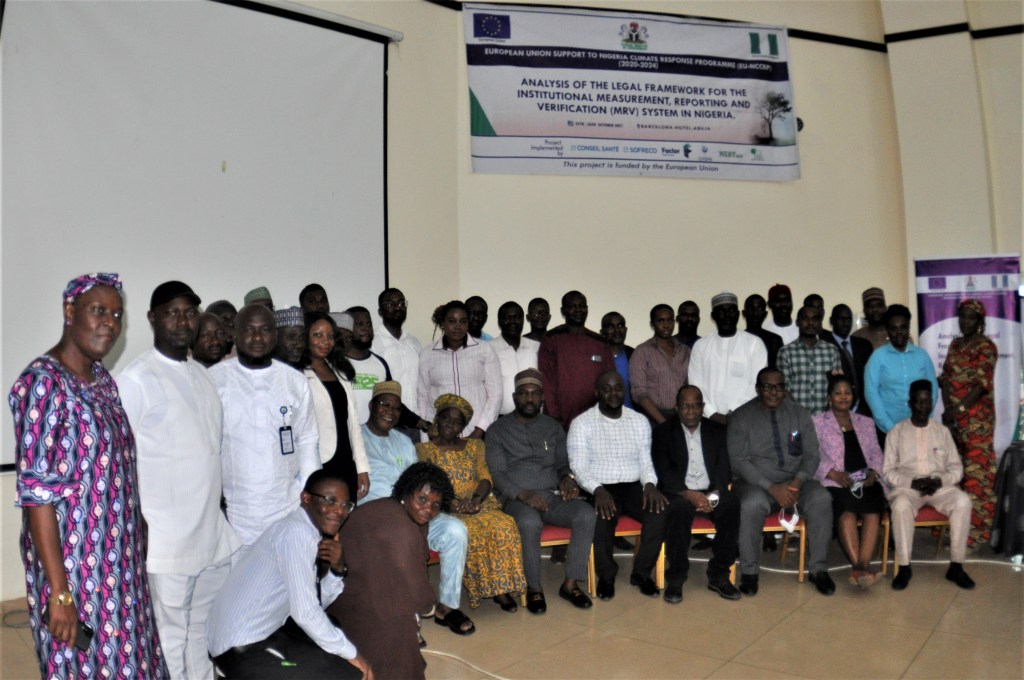
The outcomes of the analysis have culminated in the submitted interim reports which were presented to the different stakeholders so that they could examine and appraise the consultants’ findings. The consultants solicited inputs for improving the reports and analysis.
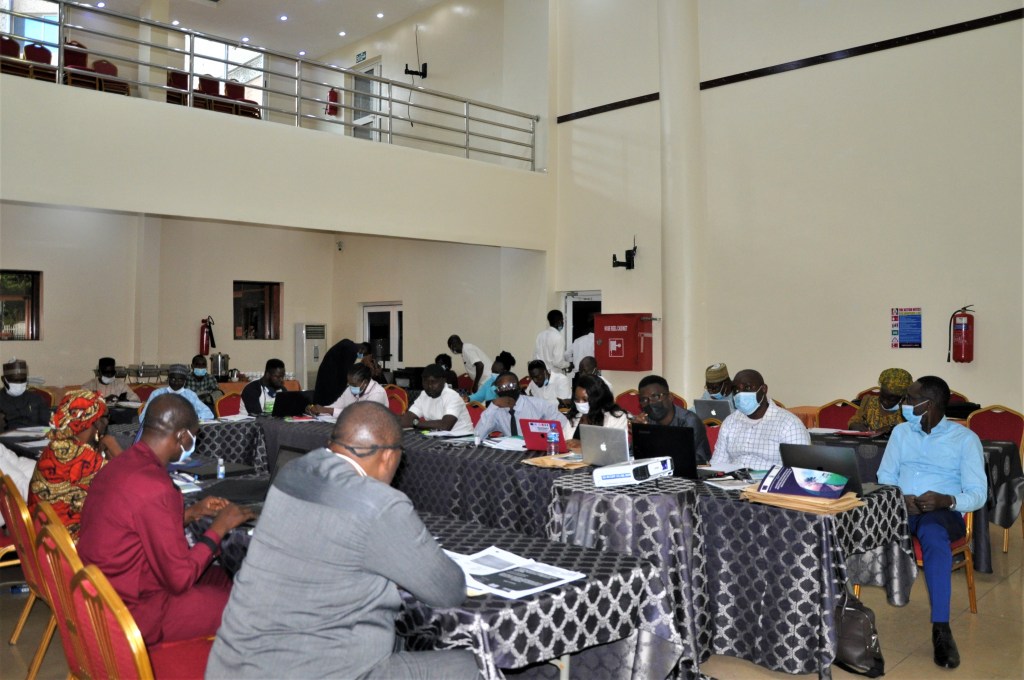
Issues in the reports were meaningfully debated and amended in plenary sessions to ensure their conformity and consistency with the consultancy’s Terms of Reference as well as enriching the content’s quality.
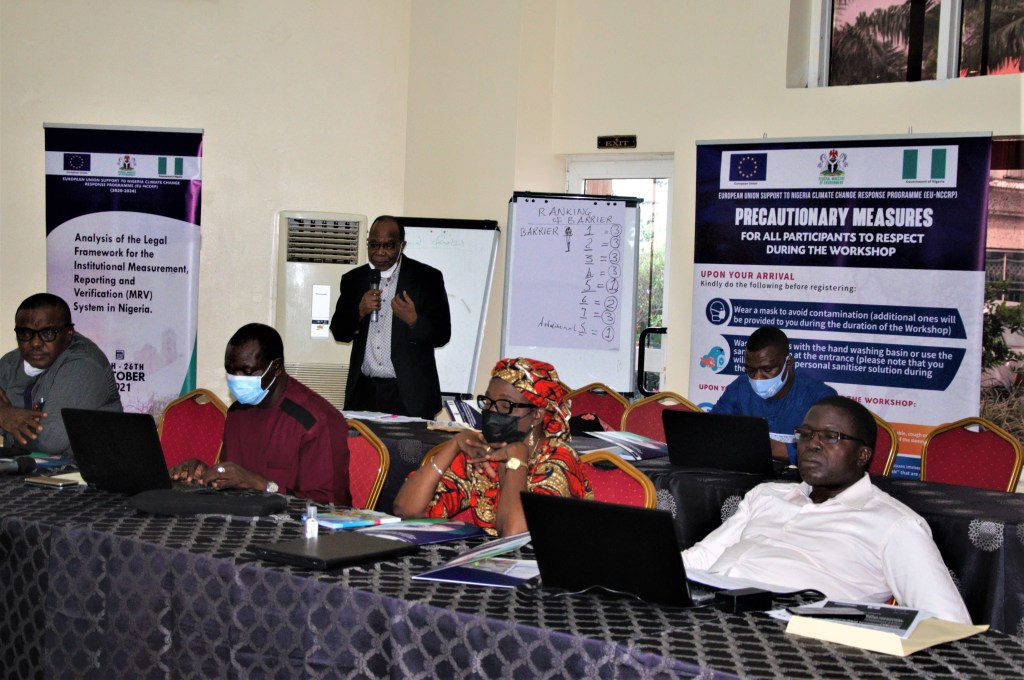
delivers the opening remarks at the workshop
At the close of the workshops, stakeholders agreed with the consultants that the legal and the institutional framework for the energy and waste sectoral MRV systems are not presently available in Nigeria. However, the existing legal frameworks include some relevant provisions which might lay the foundation of the Enhanced Transparency Framework in the targeted sectors.
On the other hand, the mandates of the Department of Climate Change (DCC), National Bureau of Statistics (NBS), Nigerian Environmental Standards & Regulations Enforcement Agency (NESREA), and Energy Commission of Nigeria (ECN) remain relevant regarding the transparency framework.
The European Union funded NCCRP that supports the Federal Government of Nigeria’s efforts in fulfilling its conditional NDC target, constitutes a vital step towards the implementation of an MRV system in Nigeria.
How Green Energy Enhances Agricultural Value Chains in Nigeria
For most households in and around Abuja, Dei-Dei Market, situated at an hour’s drive from Nigeria’s capital city, remains the first port of call for vegetables, cabbage, and the likes; which are vital for human nutrition and prevention of hunger (SDG 2).
For farmers who toil throughout the seasons to grow and bring these perishable items to the market, those involved in the agricultural value chain have always had to contend with the constant challenge of food spoilage.
Ibrahim Alhaji Adamu, a middle-aged man has been in the perishable farm produce business for twenty-eight years at the Dei-Dei Market. Over the years, he has always struggled with preserving his produce to avoid spoilage.
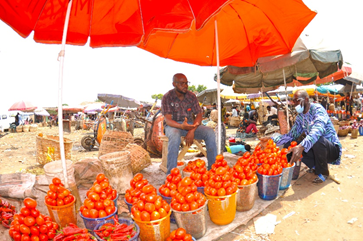
Adamu knows that selling his perishable products fast is key to making a profit on his investment. In a country with an erratic power supply, the relenting heat and humidity accelerate the decomposition of tomatoes, cabbages, and the like in no time.
As is the case for Nigeria, the Food and Agriculture Organisation of the United Nations (FAO) has observed that in developing countries, food losses are often caused by a lack of access to energy for adequate post-harvesting operations, such as drying, storage and processing, as well as a lack of transportation and distribution storage.[1]
It only took a farmer, innovator, and social entrepreneur in the person of Nnaemeka Ikegwuonu to study the problem and eventually come up with the ColdHubs concept.

ColdHubs hinges on extending the shelf life of perishable items from 2 to 21 days by using a “plug and play” modular, solar-powered walk-in cold room, for 24/7 off-grid storage and preservation of perishable foods.
The cooling system enables farmers and vegetable sellers who can now avail themselves the opportunity of hiring a space where they can store and keep food items fresh at an affordable daily fee of 100 Naira per crate (0.21 EUR), thus reducing post-harvest loss by 80%.
Despite the challenges facing entrepreneurs in Nigeria, Mr Ikegwuonu says “Policymakers should create funding windows for green innovations, that help the environment, that reduce green-house emissions should be the hallmark of interventions. This will allow young people to launch their ideas, using startup companies.”

Founded in 2015 in Owerri, ColdHubs has installed over 54 solar-powered walk-in cold rooms serving 5 250 farmers, retailers, and wholesalers across 30 sites in 20 states of Nigeria. According to Mr Ikegwuonu, the demand for ColdHubs services continues to rise and the enterprise looks forward to expanding its operations beyond the shores of Nigeria.
For the moment, plans are ongoing to open offices in Kenya, Zimbabwe and Ghana.

The ColdHubs initiative has created over 140 new jobs for women accompanied by a 50 per cent increase in customers’ income with an estimated 1 040 688 kilogrammes of carbon dioxide (Greenhouse Gas) prevented from being emitted into the atmosphere (SDG 7 & 13).
This article was prepared by the NCCRP’s Technical Assistance Team under Task 2: Dissemination of Climate Change knowledge.
[1] http://www.fao.org/energy/agrifood-chains/food-loss/en/)
NCCRP Fact Sheet July 2020
About the Programme
Following the ratification of the Paris Agreement in 2017, Nigeria committed itself to conditionally reduce its greenhouse gases (GHGs) emissions by 45% in 2030 in line with its Nationally Determined Contribution (NDC) pledge.
To support Nigeria’s mitigation efforts, the European Union, under its Global Public Goods and Challenges Thematic Programmes, is funding the Nigerian Climate Change Response Programme (NCCRP).
In addition, the NCCRP contributes to the country’s progressive achievement of Sustainable Development Goal (SDG) 13 on “climate action”. It also promotes progress towards goals 7 “affordable and clean energy” and 5 “gender equality”.
The Conseil Santé Consortium in collaboration with the Department of Climate Change, Federal Ministry of Environment is implementing the NCCRP.
Programme Goal
The implementation of the NCCRP is intended to:
- Enhance Nigeria´s capacity to meet its NDC´s pledge of conditional 45 per cent reduction of Green House Gas emissions by 2030 in line with SDG 13 on climate action.
Specific Objectives
The NCCRP is expected to achieve the following specific objectives following :
- Establish the Measuring,Reporting and Verification (MRV) framework and the implementation of sustainable sectoral MRV systems for waste and energy;
- Disseminate climate change knowledge through awareness-raising campaigns targeting the youth, civil society, stakeholders and policymakers;
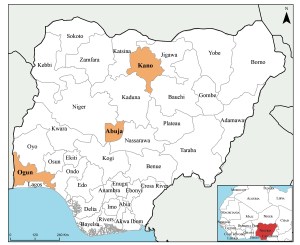
- Establish a National and two States’ waste baselines as well as emissions profile associated with sustainable capacity building on best practices.
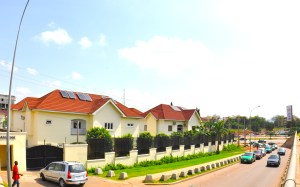
Urban Neigbourhood in Abuja : A row of houses adorn the roof tops with solar panels to cut energy costs.(2020)
Project Team
The Conseil Santé Consortium, a French agency specialising in international health, social protection, and climate change adaptation and mitigation is leading the SOFRECO, CITEPA and FACTOR outfits in providing technical assistance for the project´s implementation.
The Technical Assistance Team, supported by local partners: NEST and CENRAD, is responsible for providing advice and expertise, in collaboration with relevant stakeholders (private sector, civil societies, academia, national and sub-national governments).
The specific areas are in line with the programme’s scope and include institutional development and coordination, institutional strengthening, capacity building, planning, budgeting and financing.
The NCCRP also builds capacity at the Federal and State levels as well as supporting service management while monitoring progress against set performance indicators.
Timeline
The NCCRP is expected to last forty-eight months.
(From 20 January 2020 to 19 January 2024).
 NCCRP
NCCRP 